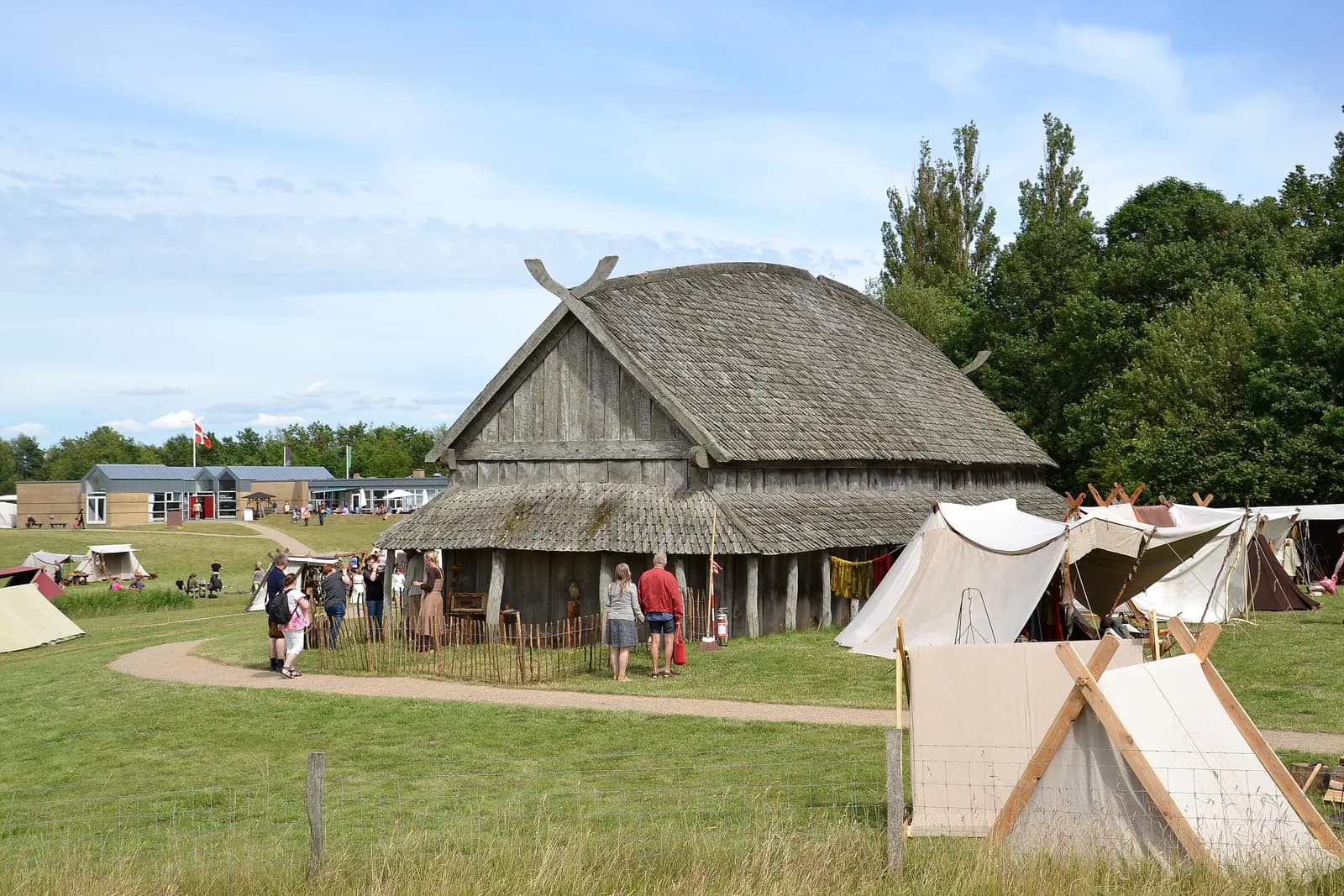
For one August weekend, the banks of the Vistula's historic world come alive in Włocławek as Vlatslavborg recreates early-medieval life.
History can be difficult to imagine when it exists only in dates, artefacts and museum cases. In Włocławek, the annual Osada Wikingów Vlatslavborg takes a different approach, inviting visitors into a carefully created world of early-medieval crafts, music, food and performance.
On 22 and 23 August 2026, Park im. Henryka Sienkiewicza, beneath the city's cathedral, will become the setting for the contemporary Viking and Slavic living-history event. The festival is not an archaeological settlement or permanent reconstruction. Instead, it is an educational and cultural project that uses historical reenactment to explore the world of the early Middle Ages. The 2026 dates and location are confirmed by the City of Włocławek.
The name itself reflects that approach. "Vlatslavborg" combines a stylised form of the historical name associated with Włocławek and the Old Norse-inspired suffix borg, meaning a fortified place. It creates a fictional historical setting while remaining rooted in the identity of the modern city.
A city on the Vistula, looking back
The choice of Włocławek is more than a convenient setting.
The city stands on the Vistula, one of the major waterways of Central Europe, and the river was an important route for movement, exchange and communication long before the modern city emerged. The wider Baltic region connected Scandinavian and Slavic communities through trade, travel and cultural contact.
Vlatslavborg draws on that broad historical world rather than claiming that the festival itself recreates a specific settlement that once stood here.
That distinction matters. Living history works best when it encourages curiosity without presenting reconstruction as archaeological fact. The festival's activities give visitors a chance to understand how objects were made, how food was prepared and how different skills fitted into everyday life.
Previous editions have included demonstrations of early-medieval cooking, pottery, weaving, blacksmithing and jewellery casting, alongside stalls presenting historical crafts. Visitors have also been able to see replicas of archaeological finds from the Viking Age and learn about the famous Włocławek sword discovered in the Vistula.
That sword provides a particularly strong local connection. Rather than treating the Viking Age as something belonging only to Scandinavia, the object points towards the wider network of people and goods moving around the Baltic and along the region's waterways.
History becomes something to experience
The appeal of Vlatslavborg lies partly in its variety.
Historical craft demonstrations sit alongside combat displays, music and activities designed for children and families. In previous editions, visitors could try rune-related activities, encounter performers representing characters from the period and watch demonstrations of techniques that would otherwise remain abstract.
The event also brings together different forms of contemporary historical culture. Reenactors concentrate on clothing, equipment and daily life, craftspeople demonstrate practical skills, while musicians create a soundtrack inspired by historical traditions and modern interpretations of them.
That combination makes the festival less like a static historical exhibition and more like an outdoor classroom, with the added energy of a cultural festival.
It also explains why the event can appeal to people who would not normally consider themselves Viking-history enthusiasts. A child fascinated by swords can encounter metalworking. Someone interested in food can see how early-medieval cooking was approached. A visitor curious about textiles can watch weaving. The history becomes tangible.
Włocławek's position on the Vistula gives this experience an additional layer. The river remains one of the defining elements of the city, and looking back at its role in earlier centuries offers another way to understand why settlements along major waterways developed connections far beyond their immediate surroundings.
Vlatslavborg does not attempt to recreate that past literally. Instead, it uses the tools of living history to make the period accessible, allowing visitors to encounter aspects of early-medieval life through sight, sound and participation.
For two days in August, the park beneath Włocławek Cathedral will therefore become a meeting point between the present city and a much older world. The reconstructed settlement may be temporary, but the questions it raises are enduring: how did people live, travel, trade and create along the Vistula, and how much of that interconnected world can still be discovered today?
That is where Vlatslavborg finds its value. It does not need to claim that Włocławek was a Viking town. Instead, it reminds visitors that the city's river has always connected it to a much wider story.
Visitor Information
Event: Osada Wikingów Vlatslavborg
Dates: Saturday and Sunday, 22–23 August 2026
Location: Park im. Henryka Sienkiewicza, Włocławek